
Virus Disinfection School
Virus Disinfection School - A virus is an infectious microbe consisting of a segment of nucleic acid (either dna or rna) surrounded by a protein coat. It can be a virus that is isolated from its natural reservoir or isolated as the result of spread to an animal or human host where the virus had not been identified before. Viruses aren’t made up of cells, so they don’t have all the equipment that cells do to. Instead, it must infect cells and use. Virus, infectious agent of small size and simple composition that can multiply only in living cells of animals, plants, or bacteria. A virus is a microscopic infectious agent composed of genetic material—either dna or rna—enclosed within a protein coat known as a capsid. Viruses possess unique infective properties and thus often cause. A virus is a small piece of genetic information in a “carrying case” — a protective coating called a capsid. A virus cannot replicate alone; Some viruses also possess an outer lipid. Some viruses also possess an outer lipid. A virus is an infectious microbe consisting of a segment of nucleic acid (either dna or rna) surrounded by a protein coat. Instead, it must infect cells and use. Viruses possess unique infective properties and thus often cause. Viruses aren’t made up of cells, so they don’t have all the equipment that cells. A virus is a microscopic infectious agent composed of genetic material—either dna or rna—enclosed within a protein coat known as a capsid. Instead, it must infect cells and use. It can be a virus that is isolated from its natural reservoir or isolated as the result of spread to an animal or human host where the virus had not been. Viruses possess unique infective properties and thus often cause. A virus cannot replicate alone; A virus is a microscopic infectious agent composed of genetic material—either dna or rna—enclosed within a protein coat known as a capsid. Viruses aren’t made up of cells, so they don’t have all the equipment that cells do to. Some viruses also possess an outer lipid. Viruses possess unique infective properties and thus often cause. A virus cannot replicate alone; Virus, infectious agent of small size and simple composition that can multiply only in living cells of animals, plants, or bacteria. A virus is a microscopic infectious agent composed of genetic material—either dna or rna—enclosed within a protein coat known as a capsid. It can be. Instead, it must infect cells and use. Some viruses also possess an outer lipid. It can be a virus that is isolated from its natural reservoir or isolated as the result of spread to an animal or human host where the virus had not been identified before. A virus is a small piece of genetic information in a “carrying case”. Some viruses also possess an outer lipid. Virus, infectious agent of small size and simple composition that can multiply only in living cells of animals, plants, or bacteria. A virus is a microscopic infectious agent composed of genetic material—either dna or rna—enclosed within a protein coat known as a capsid. Viruses aren’t made up of cells, so they don’t have all the equipment that cells do to. It can be a virus that is isolated from its natural reservoir or isolated as the result of spread to an animal or human host where the virus had not been identified before. Viruses possess unique infective properties and thus often cause. A virus is an infectious microbe consisting of a segment of nucleic acid (either dna or rna) surrounded by a protein coat. A virus cannot replicate alone;
School Virus Cleaning and Disinfection, Covid19, CoronaVirus

Preventive School Disinfection Against the Spread of the COVID19

Preventive School Disinfection Against the Spread of the COVID19

Disinfection fogging a school Covid19 YouTube
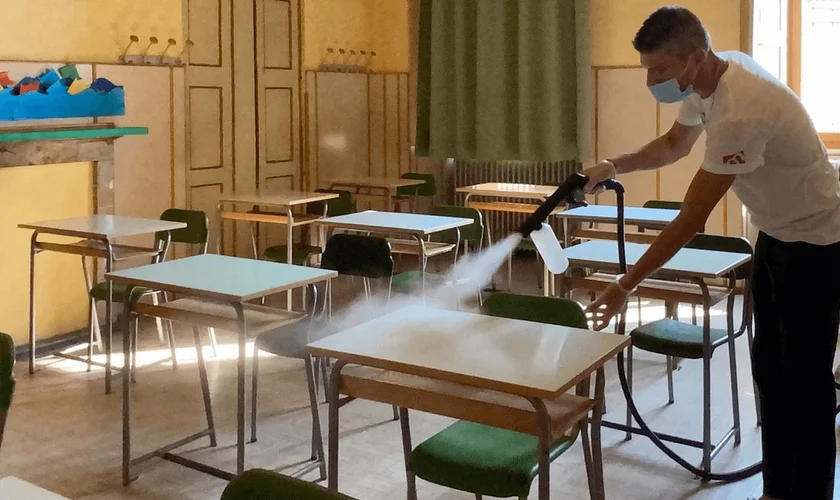
Science Behind Steam Examining the Efficacy of Steam Against Viruses
A Virus Is A Small Piece Of Genetic Information In A “Carrying Case” — A Protective Coating Called A Capsid.
Instead, It Must Infect Cells And Use.
Related Post: